You invested in solar panels to save money, reduce your reliance on traditional energy, and do something good for the planet. It felt like a smart, forward-thinking decision. But what if, without realizing it, your system isn’t performing anywhere near its full potential? What if something as simple as neglecting regular care is quietly eating into your savings month after month?
Many homeowners don’t realize how much dirty solar panels can impact their energy production. It’s easy to assume that rain will wash everything away or that the panels will take care of themselves.
But over time, layers of dust, debris, and environmental buildup can create a barrier between sunlight and your system. That means less energy, higher bills, and a slower return on your investment.
This isn’t just a minor issue. It’s a steady, ongoing loss that adds up over time. The good news? It’s also one of the easiest problems to fix. In this guide, we’ll walk through how dirt affects performance, the hidden costs involved, and how simple maintenance can help you get the most out of your solar system again.
How Dirty Solar Panels Reduce Panel Efficiency and Increase Energy Loss Over Time
At first glance, a little dust on your panels might not seem like a big deal. After all, it’s just a thin layer, right? But solar panels rely on direct sunlight to generate electricity. Even a small obstruction can disrupt that process.
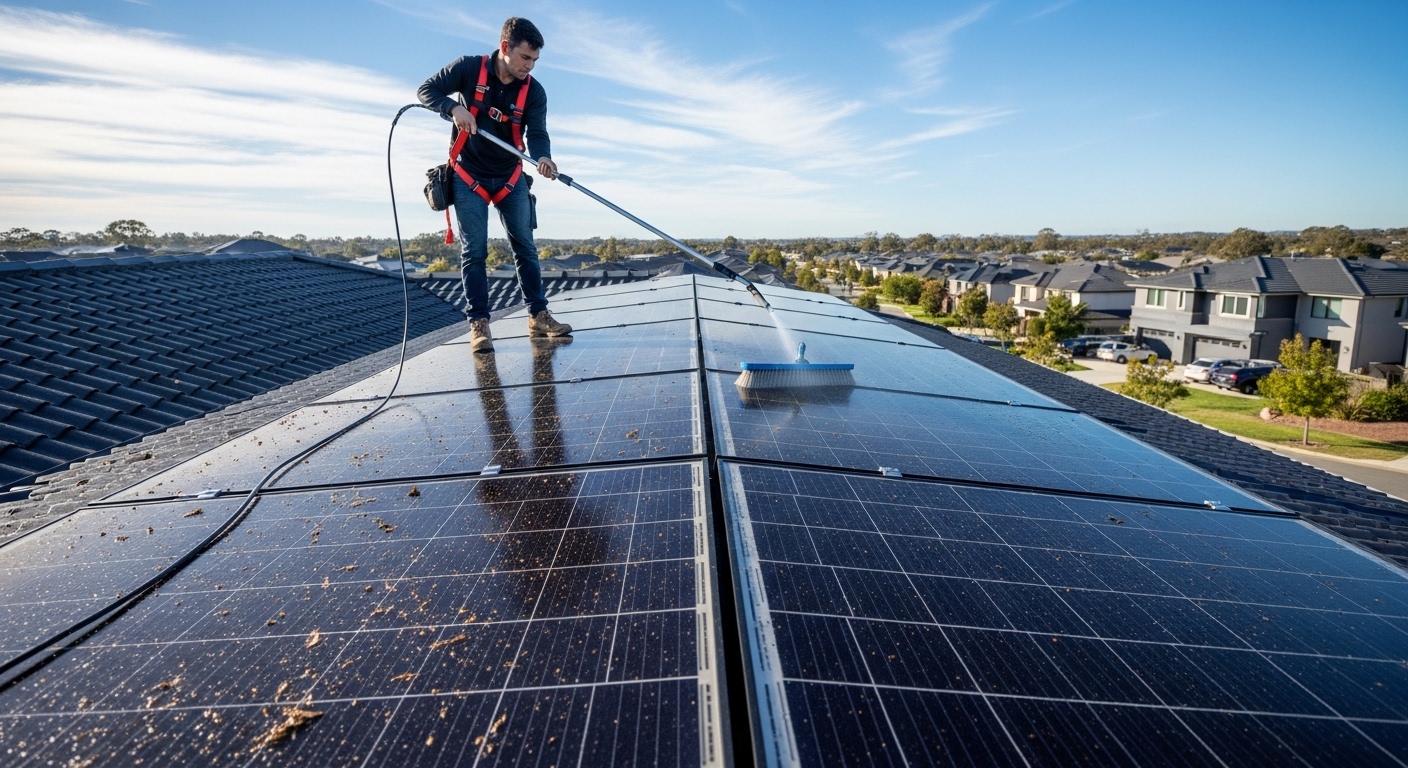
When grime accumulates, it blocks sunlight from reaching the photovoltaic cells. This leads to reduced panel efficiency, meaning your system produces less energy than it was designed to. The result is simple: your home starts pulling more electricity from the grid, and your monthly bills creep up.
What makes this more concerning is how gradually it happens. You won’t wake up one day to a dramatic drop. Instead, it’s a slow decline. A few percentage points lost here, a little more there. Over weeks and months, it becomes a noticeable difference.
Environmental factors play a major role. In dry regions, airborne particles settle quickly. In urban areas, pollution adds another layer. Even in cleaner environments, pollen and seasonal debris can build up. This accumulation leads to what’s known as soiling loss, a reduction in output caused by surface contamination.
The key takeaway is this: your panels don’t need to look completely covered in dirt to be underperforming. Even a thin film can significantly reduce their ability to generate power.
The Hidden Impact of Dust Buildup and Bird Droppings on Solar Panel Cleaning Needs
Not all dirt is created equal. Some types of buildup are far more damaging than others, and they don’t just reduce output, they can create uneven performance across your system.
Take dust buildup, for example. It spreads evenly across the surface, creating a consistent barrier that lowers overall production. While this might seem manageable, it still reduces the total energy generated every single day.
Now consider bird droppings. Unlike dust, these create concentrated blockages. When even a small portion of a panel is covered, it can affect the performance of the entire cell string. That means one small spot can reduce the efficiency of a much larger area.
Other environmental factors can also contribute. In regions prone to seasonal fires, wildfire ash can settle on panels and form a stubborn layer that doesn’t wash away easily. This type of residue often requires proper solar panel cleaning rather than relying on natural elements.
These issues highlight why regular cleaning isn’t optional, it’s essential. Ignoring them allows buildup to accumulate, making it harder to restore your panels to peak performance later on.
Why Solar Maintenance Is the Key to Preventing Long-Term Output Drop and System Damage
Solar panels are designed to last for decades, but that doesn’t mean they’re maintenance-free. Like any long-term investment, they need care to perform at their best.
Routine solar maintenance ensures that your system continues operating efficiently year after year. Without it, small issues can turn into bigger problems. Dirt buildup leads to reduced energy production, but it can also cause uneven heating on the panel surface. Over time, this stress can impact the longevity of the system.
One of the biggest concerns is the gradual output drop that occurs when maintenance is ignored. This isn’t just about losing a bit of efficiency, it’s about consistently underperforming month after month. Over the lifespan of your system, that can translate into thousands of dollars in lost savings.
Maintenance also helps identify other issues early. Loose connections, minor damage, or shading problems can all affect performance. When you stay proactive, you avoid costly repairs and ensure your system continues delivering the results you expected when you first installed it.
Think of it this way: you wouldn’t skip servicing your car for years and expect it to run perfectly. Your solar system deserves the same level of attention.
How Skipping Solar Panel Cleaning Quietly Increases Your Monthly Electricity Bills
Most people assume that if their panels are installed and connected, they’ll just keep working at full capacity. But the reality is different. Performance depends heavily on cleanliness.
When your panels are dirty, they generate less electricity. That means your home relies more on grid power. Even if the difference seems small, it adds up quickly.
Imagine your system is producing 15% less energy due to dirt. That’s 15% more electricity you’re buying every month. Over a year, that’s a significant increase in your energy costs.
What makes this frustrating is that it’s avoidable. Regular solar panel cleaning can restore lost efficiency and bring your system back to optimal performance. It’s one of the simplest ways to protect your investment.
Another important step is to track your panel output. Monitoring your system helps you spot performance drops early. If you notice a decline that isn’t related to weather changes, it’s often a sign that cleaning or maintenance is needed.
Staying aware of your system’s performance puts you in control. It ensures you’re not unknowingly paying more than you should.
The Real Cost of Ignoring Dirty Solar Panels on Residential and Commercial Systems
When people think about solar panel costs, they usually focus on installation. But ongoing performance plays an equally important role in determining overall value.
Ignoring dirty solar panels doesn’t just reduce efficiency, it directly impacts your return on investment. The savings you expected from your system depend on consistent energy production. When output drops, those savings shrink.
For homeowners, this means higher monthly bills and a longer payback period. For businesses, the impact can be even greater. Commercial systems are designed to offset large energy costs. When performance declines, operational expenses increase.
Over time, the financial impact becomes clear. What could have been a highly efficient system turns into an underperforming one. And the longer the issue goes unaddressed, the harder it is to recover lost efficiency.
There’s also the added cost of potential repairs. Dirt buildup can lead to wear and tear, especially if it’s left unchecked for long periods. Addressing these issues early is always more cost-effective than dealing with them later. In simple terms, neglecting your panels costs more than maintaining them.
Creating A Smart Cleaning Schedule That Maximizes Panel Efficiency Year-Round
Consistency is key when it comes to maintaining your solar panels. Instead of waiting until performance drops, it’s better to stay ahead with a proactive approach.
A well-planned cleaning schedule ensures your panels remain free from debris and continue operating efficiently. The frequency depends on your environment. Areas with high dust, pollution, or bird activity may require more frequent cleaning.
Seasonal changes also play a role. Spring can bring pollen, while dry summers often lead to increased dust accumulation. After storms or unusual environmental events, it’s a good idea to inspect your panels and clean them if needed.
The goal is to prevent buildup before it becomes a problem. Regular cleaning not only improves efficiency but also makes each session easier. When dirt is removed consistently, it doesn’t have a chance to harden or become more difficult to clean.
By staying proactive, you ensure your system delivers reliable performance throughout the year.
Professional Solar Maintenance Vs Diy Cleaning: What Works Best for Long-Term Performance
When it comes to cleaning your panels, you have two main options: doing it yourself or hiring professionals. Each approach has its pros and cons, but the right choice depends on your priorities.
DIY cleaning can be cost-effective, but it requires care. Using the wrong tools or techniques can damage the panel surface. Harsh chemicals, abrasive materials, or excessive pressure should always be avoided.
Safety is another consideration. Roof access can be risky, especially for multi-story homes. Without proper equipment, the process can become dangerous.
Professional solar maintenance services offer a more reliable solution. Experts use specialized tools and methods designed to clean panels without causing damage. They also inspect the system during the process, identifying any potential issues early.
While professional services come at a cost, they often save money in the long run by maintaining optimal performance and preventing damage. If your goal is consistent, hassle-free efficiency, professional maintenance is usually the better option.
Don’t Let Hidden Dirt Drain Your Savings: Take Back Control of Your Solar Performance
Solar panels are one of the smartest investments you can make for your home or business, but they don’t take care of themselves. Over time, even a small layer of dirt can quietly reduce performance, increase your reliance on grid electricity, and chip away at your savings. What starts as a minor issue can turn into a noticeable financial loss if it’s ignored for too long.
The impact of dirty solar panels is real, but it’s also completely manageable. With regular cleaning, proper maintenance, and a bit of attention to performance, you can keep your system running exactly as it should. It’s not about constant upkeep, it’s about smart, consistent care that protects your investment.
If you’ve noticed a drop in performance or simply want to make sure your panels are working at their best, now is the time to act. Small steps today can prevent bigger losses tomorrow.
Don’t let dirt stand between you and the savings you deserve. schedule a panel cleaning today and keep your system performing at its full potential with the trusted support of GM Solar.