If you are a homeowner in California, you have probably heard the whispers. Maybe you saw a news headline flash across your screen, or perhaps a neighbor mentioned it nervously over the fence. The phrase NEM 3.0 has been floating around, and honestly, it has caused a fair amount of confusion and even a little fear. I get it.
When you hear that the rules are changing, especially regarding something as important as your energy future, it is natural to feel a bit uneasy. You might be wondering if solar still makes sense for your family. Does the new policy kill your solar savings? Is it still worth the investment?
Let me ease your mind right now. The answer is yes, but the game has changed. You just need to understand the new rules so you can play to win. Think of me as your guide through this policy shift. We are going to break down NEM 3.0 in plain English, no confusing jargon, just the facts you need to protect your wallet and your home.
By the end of this, you will feel empowered, not intimidated, ready to take charge of your energy future with clarity and confidence.
The End of an Era: Why Net Metering Changed and What It Means for You
To understand where we are going, we have to briefly look at where we have been. For years, California homeowners enjoyed a net metering policy often referred to as NEM 2.0. Under that structure, when your home solar system produced excess energy during the sunny afternoon hours, you sent it back to the grid, and the utility company credited you at the full retail rate.
It was a sweet deal. Your meter literally spun backwards, and you built up bill credits that you could use at night or during cloudy days. It made the financial math incredibly simple.
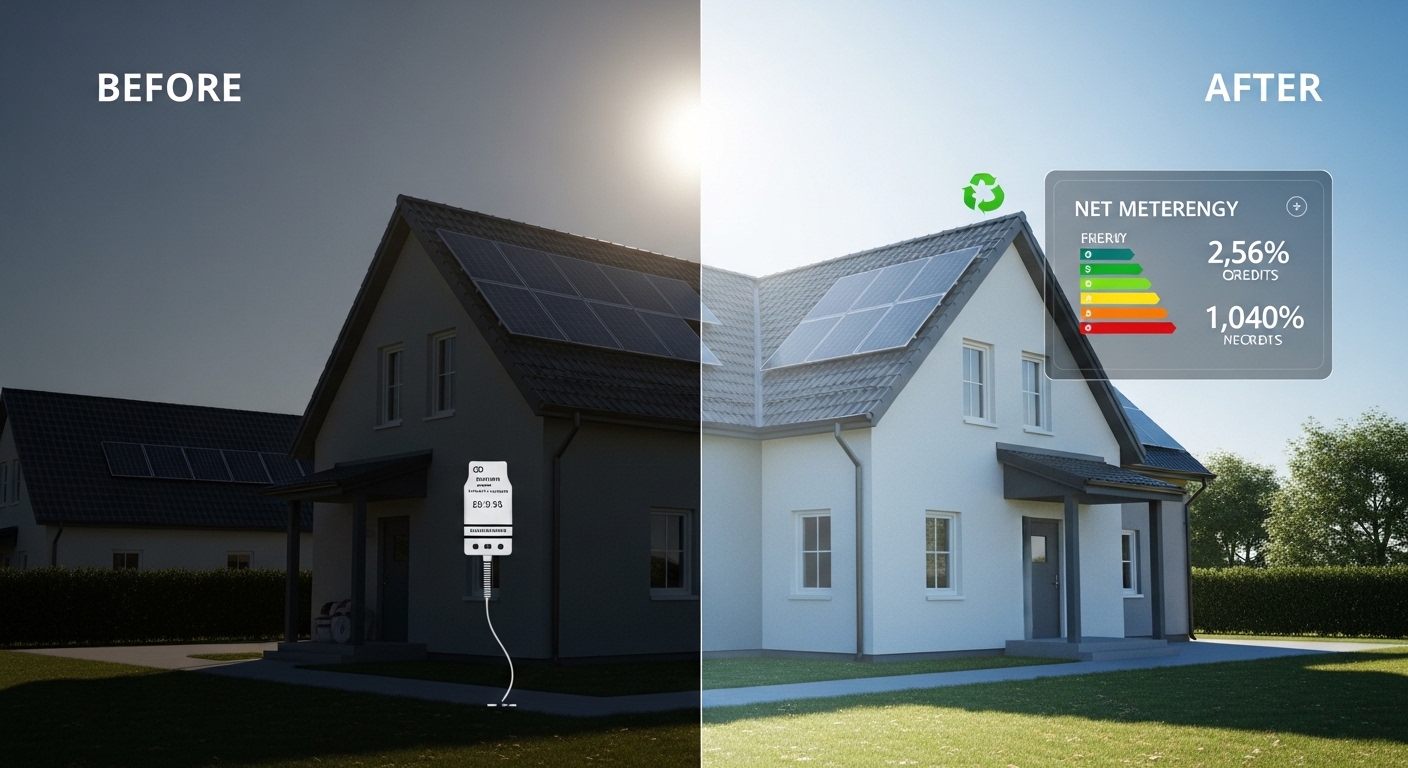
Then came NEM 3.0. The California Public Utilities Commission updated the rules, and the central change revolves around something called the export rate. Under the new PG&E solar policy (which also applies to SCE and SDG&E), the rate you are paid for the excess energy you send to the grid has dropped significantly.
Instead of getting the full retail rate, you now receive a rate based on the utility’s avoided cost. Essentially, they pay you closer to the wholesale price of electricity, which is much lower. I know that sounds scary when you first hear it. But here is the truth that a lot of the doom and gloom headlines miss: NEM 3.0 didn’t kill solar.
It simply changed the incentive structure. It is no longer just about being a generator for the utility. Now, the real power lies in controlling your own energy. The focus has shifted from maximizing bill credits to maximizing self-consumption. Instead of sending every extra electron to the grid for a low price, the goal now is to use those electrons yourself, right when you produce them.
This shift in net metering policy is actually pushing homeowners toward a smarter, more resilient energy system. It is less about trading with the utility and more about energy independence.
The Secret Weapon Under Nem 3.0: Why Self-Consumption Is Your New Best Friend
So, how do you win in the era of NEM 3.0? You stop treating your home solar system like a power plant for the grid and start treating it like a personal energy bank. The key to protecting your solar savings under this new PG&E solar policy is a strategy we call self-consumption.
Let me paint a picture for you. Under the old rules, it was okay to produce a ton of power at 2:00 PM when you weren’t home, send it to the grid, and pull it back at 7:00 PM when you were cooking dinner. Under NEM 3.0, that transaction doesn’t work in your favor anymore because the export rate is low.
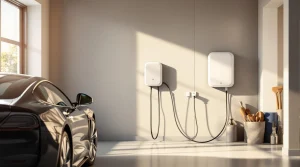
But what if you could store that 2:00 PM energy in a battery and use it yourself at 7:00 PM? Now you are avoiding buying expensive electricity from the grid during peak hours. That is where the magic happens. This is why we talk so much about battery pairing with NEM 3.0. Adding energy storage to your solar installation completely changes the financial equation.
Instead of relying on low value bill credits from the utility, you are leveraging high value self-consumption. You use your own power when the sun is shining to run your appliances, and you charge a battery. Then, when the sun goes down and utility rates skyrocket, you run your home off that battery. You essentially become your own utility.
This strategy is what preserves and even enhances your solar payback period. Yes, there is an upfront cost for the battery, but when we look at the numbers, the combination of solar plus storage under NEM 3.0 often results in similar or even better long term solar savings than the old system offered, all while giving you the incredible benefit of backup power during grid outages. It is a win win.
How Battery Pairing Transforms Your Solar Payback and Protects Your Wallet
Let me dive a little deeper into battery pairing with NEM 3.0 because this is truly the heart of making the new policy work for you. When we talk about the solar payback period, we are talking about how long it takes for your energy savings to cover the cost of your system.
Under NEM 2.0, payback periods were often around 5 to 7 years simply by using the grid as a battery. Under NEM 3.0, if you try to go without storage, your solar payback period stretches out significantly because those export rates are just too low.
However, when you pair a battery with your system, everything changes. You are no longer at the mercy of the utility’s avoided cost rates. You are capturing the full value of every kilowatt your home solar system produces. You can program your battery to charge during the day and discharge during the high cost peak hours, typically from 4:00 PM to 9:00 PM.
This is often called peak shaving. By doing this, you avoid buying expensive power from the grid, which is where the real savings live.
Moreover, battery pairing with NEM 3.0 gives you something that no net metering policy can: resilience. When the grid goes down, which we have seen happen more frequently with wildfires and heatwaves, your neighbors are sitting in the dark while you keep your lights on, your refrigerator running, and your family comfortable.
That peace of mind is something that goes beyond just dollars and cents. When we design systems for homeowners today, we are looking at the whole picture. We are looking at your usage patterns, your roof orientation, and your goals for energy independence. We are ensuring that your solar payback is not just acceptable, but optimal, even under the new PG&E solar policy.
Navigating The New Landscape: Why Expertise Matters More Than Ever
I am going to be honest with you. Navigating NEM 3.0 on your own is tough. The utility companies are not exactly sending out welcome wagons to help you maximize your solar savings. Their goal is to protect their bottom line, and the export rate they offer reflects that. This is precisely why having a trusted partner by your side is no longer just nice to have; it is essential.
You need a team that understands the nuances of net metering policies inside and out. You need someone who can look at your specific home, your specific energy usage, and model out the best system design for this new era. This goes beyond just slapping solar panels on your roof.
It involves sophisticated battery pairing, load shifting strategies, and understanding the time of use rates that apply to your specific utility. At our core, we empower homeowners to take charge of their energy future. We are not just installers; we are educators and advocates.
We take the time to explain how NEM 3.0 impacts your specific situation. We show you the math. We help you understand how self-consumption works in your home, whether you are a family that is home during the day or one that is gone until the evening.
We help you navigate the interconnection agreements with the utility, making sure all the paperwork is filed correctly so you get the grandfathering and the rates you are entitled to. When you work with us, you are not just buying equipment; you are buying peace of mind.
Your Path Forward: Making Nem 3.0 Work for Your Home
I know that policy changes can feel daunting. When you hear terms like net metering, export rate, and avoided cost, it is easy to throw your hands up and decide to wait. But here is what I want you to remember: waiting usually means paying. Utility rates are not going down. Every year you wait, you are paying higher bills to the utility company, money that could be going toward owning your own power.
The landscape has changed with NEM 3.0, but the opportunity is still massive. In fact, the shift toward self-consumption and battery pairing creates a home energy system that is actually more robust and more resilient than the systems of the past.
You are no longer just a customer; you become an energy manager. You get backup power. You get predictable monthly energy costs. You get the satisfaction of knowing you are using clean, renewable energy right when it is produced, reducing strain on the grid and helping create a greener planet.
The first step is simply getting the right information tailored to you. Not generic online calculators, but real numbers based on your home, your roof, and your utility rate plan. We are here to help you cut through the noise. We have helped countless families navigate this transition, and we would love to help you too.
So, if you have been sitting on the fence about solar because of NEM 3.0, let’s have a conversation. Let’s look at your latest utility bill and see what the numbers actually look like for you. Let’s design a system that uses smart battery pairing and optimized self-consumption to maximize your solar savings. Your energy future is still bright, and we are here to help you see it clearly.
Ask us how NEM 3.0 affects your savings. Reach out today, and let’s build a plan that gives you energy independence, lower bills, and a home that is ready for whatever the future brings. You deserve to feel confident about your energy choices, and we are here to make sure you do.