When you first start looking into solar energy, that question,
“How many solar panels do I actually need?” feels a bit like asking how long a piece of string is. It’s exciting, but it can also be a little overwhelming. You might find yourself staring at your roof, wondering if it’s big enough, or looking at your monthly electric bill with a mix of hope and confusion. I get it.
You aren’t just looking for a number; you’re looking for peace of mind. You want to know that the investment you’re making will actually cover your family’s needs, slash those monthly bills, and give you the energy independence you deserve. The truth is, there isn’t a one-size-fits-all answer.
It is a personal calculation that blends your lifestyle, your home’s physical characteristics, and your future goals. So, let’s take a deep breath and walk through this together. By the end of this guide, you’ll feel like a pro, ready to make an informed decision that turns your home into a hub of clean, renewable energy.
Understanding Your Home’s Appetite: The Magic of Kwh Usage
Before we even look at the roof, we have to look at the habits inside the house. The starting point for any accurate system sizing is your kWh usage. Think of your electric bill as the appetite of your home. Is it a light snacker, or does it feast on energy?
To figure out how many solar panels will get you to net zero, you need to know exactly how much energy you consume annually. Pull out your last 12 months of utility bills. You are looking for the total kilowatt-hours (kWh). You might notice your usage spikes in the summer when the AC is running or in the winter if you have electric heat.
A good home solar system isn’t just built for the average month; it is built to handle those peaks. A typical American household uses somewhere between 900 and 1,200 kWh per month. But your home could be completely different. Maybe you just bought an electric vehicle, or perhaps you recently upgraded to energy efficient appliances.
When we sit down together, we look at this historical data to determine the size of the system that will offset your needs. If you want to eliminate your electric bill entirely, we have to match your annual kWh usage with the annual production of the residential solar array.
It’s a simple equation, but getting the data right at the start is what separates a good system from a great one.
The Three Pillars of Accuracy: Roof Size, Sun Hours, And the Shade Factor
Alright, now that we know how much energy you need, we have to figure out if your roof can deliver it. This is where the physics of solar gets really interesting. You can’t just throw solar panels up and hope for the best. We have to look at three critical physical factors: roof size, sun hours, and shading.
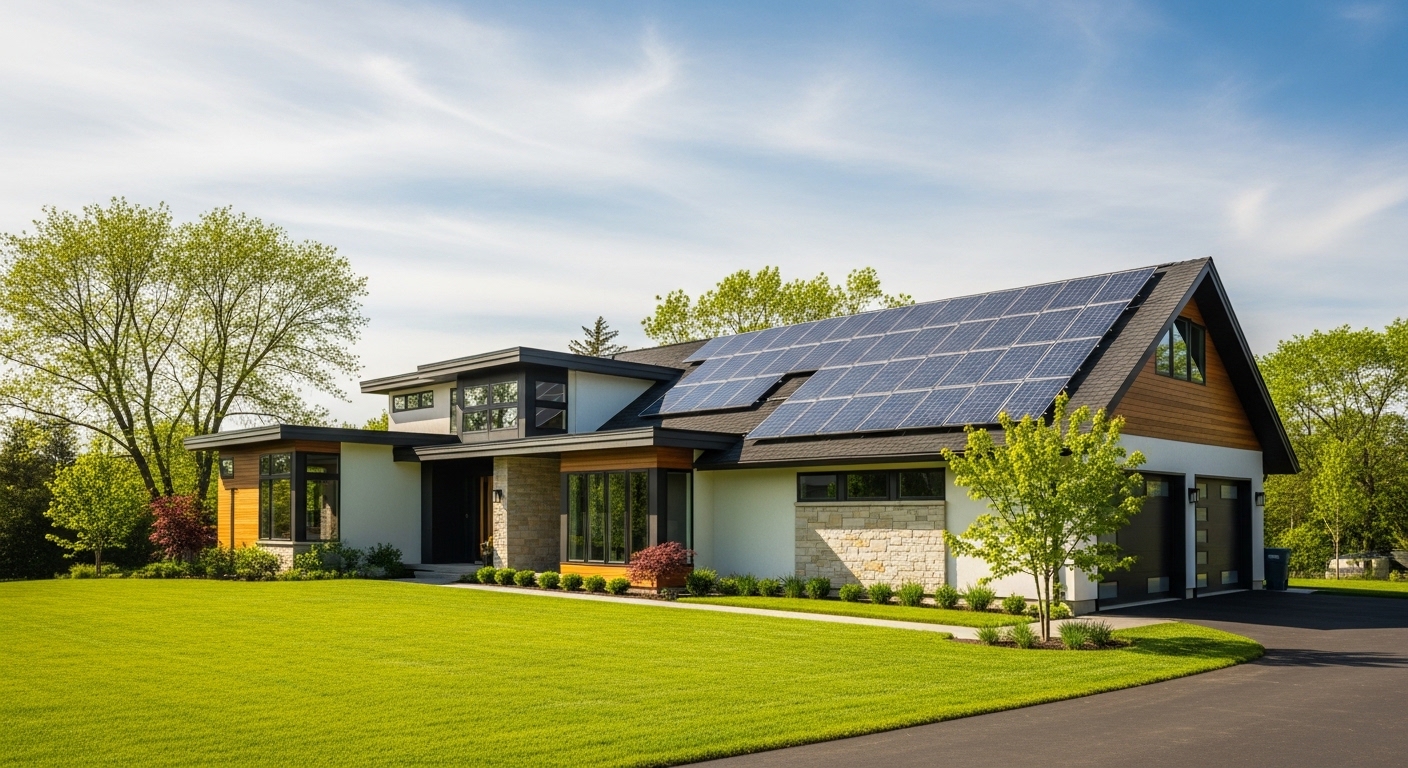
First, let’s talk about roof size. It sounds obvious, but the square footage of your roof dictates the maximum number of solar panels we can install. A modern, high efficiency panel takes up about 17 to 22 square feet. If you have a small roof with a lot of dormers or chimneys, we might need to use premium, high wattage panels to pack more power into a smaller space.
Conversely, if you have a sprawling ranch style home, we have plenty of room to work with. Next up is sun hours. This is a huge variable that a lot of new homeowners don’t consider. Not every location gets the same amount of sunshine.
If you live in a sunny state like Arizona or California, you might need fewer solar panels to produce the same amount of energy as a home in the Pacific Northwest. We look at the peak sun hours for your specific location. A home that gets 5 peak sun hours a day will require a smaller array than a home that only gets 3.5 hours.
Finally, and this is the one that breaks hearts sometimes, we have to talk about shading. A tree, a neighboring building, or even a simple chimney can cast a shadow that drastically reduces the output of your residential solar system.
We don’t just eyeball this; we use advanced tools to analyze the shade patterns across your roof throughout the year. If there is heavy shading, we might discuss trimming trees, using micro inverters that isolate the shade impact, or even exploring a ground mount system. Getting these three pillars right ensures your home solar system performs exactly as designed for the next 25 years.
Beyond The Panels: Why An Energy Audit Changes the Game
Here is a little secret that can actually save you money on your solar installation cost. Before we add a massive power plant to your roof, it sometimes makes more sense to make your home more efficient first. This is where the concept of an energy audit becomes your best friend.
Think of it like this: if you have a bucket with holes in it, you don’t want to fill it with more water until you patch the holes. Your home is the same way. Why install a huge, expensive home solar system to power an old, failing HVAC unit or drafty windows that are leaking your hard earned money into the atmosphere?
We take a holistic approach to your home. During an energy audit, we look at the insulation in your attic, the age of your heating and cooling systems, and the quality of your windows. Sometimes, the most cost effective path to lower bills is a combination of smart upgrades. We can enhance your home with high efficiency HVAC systems that use half the electricity of older models, or new window replacements that keep the cool air in during the summer. By tightening up the home’s envelope, we lower your overall kWh usage. When we lower the usage, we lower the number of solar panels you need to buy.
This approach not only reduces your upfront solar installation cost, but it makes your home more comfortable and efficient overall. It’s about creating a space that works smarter, not harder.
Financing Your Future: Making Sustainability Affordable
One of the biggest fears people have when looking at residential solar is the upfront price tag. They look at the total number of solar panels and the equipment costs and get a little nervous. But here is the thing that changes everything: solar panel financing.
You do not have to pay for this all at once. In fact, most homeowners don’t. We believe that sustainability should be practical and affordable for everyone, which is why we offer flexible solar panel financing options designed to fit your budget. When you look at the solar installation cost, you need to look at the monthly payment versus your current utility bill.
If you are currently paying $200 a month to the utility company, and we can structure a loan for your home solar system that costs you $150 a month, you start saving money on day one. That is the magic of it. The financing makes the system pay for itself.
We walk you through every option, ensuring that the transition to clean, renewable energy doesn’t strain your finances. We want you to look at your roof and see not just solar panels, but a smart financial asset that protects you from rising utility rates for decades to come. It isn’t just an expense; it is a long term investment in your property’s value and your family’s monthly cash flow.
Why Experience Matters When Designing Your System
By now, you probably realize that answering “how many solar panels do I need?” isn’t a simple math problem. It involves analyzing your kWh usage, measuring your roof size, calculating your sun hours, evaluating shading, and conducting a thorough energy audit. That is a lot of moving parts. This is precisely why the expertise of the team you choose matters so much.
We don’t just sell solar panels; we design energy solutions. Our team of experts treats every home like it is our own. We look at the architecture of your home, the direction it faces, and your long term goals. Are you planning to buy an electric car in two years? We will oversize the system slightly now to prepare for that. Do you have a workshop in the backyard that needs power? We factor that in.
This level of precision ensures that your residential solar system is neither too small (leaving you still dependent on the utility grid) nor too large (costing you more than you need to spend). We design every project with accuracy and purpose, ensuring that every kilowatt produced is a kilowatt used.
If you are curious about the numbers specific to your home, I highly recommend looking into our consultation process. It is a deep dive into your specific situation where we map out exactly what your path to energy independence looks like, free of pressure and full of clarity.
Taking Charge of Your Energy Future
Making the switch to solar is more than just a home improvement project; it is a lifestyle shift. It is about deciding that you no longer want to be at the mercy of fluctuating utility rates. It is about wanting to leave a greener planet for your kids. Every installation we complete is a step toward cleaner energy, lower costs, and a more comfortable home.
Whether you are looking at a full home solar system for your family, or you are a business owner looking at residential solar (or commercial) options to boost your bottom line, the process starts with one simple action: getting the facts.
I know this was a lot of information, but knowledge is power, quite literally. You now know that the number of solar panels depends on your unique kWh usage, the physical realities of your roof size and sun hours, and the integrity of your home’s energy efficiency. You know that flexible solar panel financing makes the transition easy, and that a proper energy audit ensures you aren’t wasting a dime.
So, what’s next? Are you ready to see what this looks like for your home? I would love nothing more than to help you take that first step. There is no obligation, just a conversation about what is possible. We can look at your specific numbers, evaluate your roof, and give you a clear picture of how solar panels can work for you.
Book a free home consultation today. Let’s sit down, look at your goals, and design a system that fits your life perfectly. Your journey to energy independence is just one click away.