Let me share a scenario that plays out more often than you might think. A homeowner gets excited about going solar. They have done their research, they understand the savings, they are ready to take control of their energy future. They call us, we come out for a consultation, and everything is moving forward.
Then we go up on the roof to do a thorough inspection. And that is when we find it. The roof is older. The shingles are showing signs of wear. Maybe there is a small leak that has been patched over the years, or the roof age is creeping up toward the end of its expected lifespan.
Suddenly, what seemed like a straightforward solar installation turns into a bigger question. Do you move forward with the solar panels on a roof that may need attention in a few years? Or do you pause, invest in a roof replacement, and then install solar on a fresh, solid foundation? I get this question constantly, and I understand why it causes anxiety.
You came for solar, not for a new roof. But here is the truth I have learned from years of helping families navigate this exact situation. Making the right decision now, even if it means delaying the solar install slightly, can save you thousands of dollars, countless headaches, and years of regret down the road. Let me walk you through what you need to know.
Why Roof Condition Matters Before a Roof Replacement
Think of your roof as the foundation of your solar roof system. Your solar panels are designed to last 25 to 30 years. They are mounted to your roof using hardware that penetrates the shingles and attaches to the structure beneath. Once those panels are up, accessing the roof underneath becomes difficult and expensive.
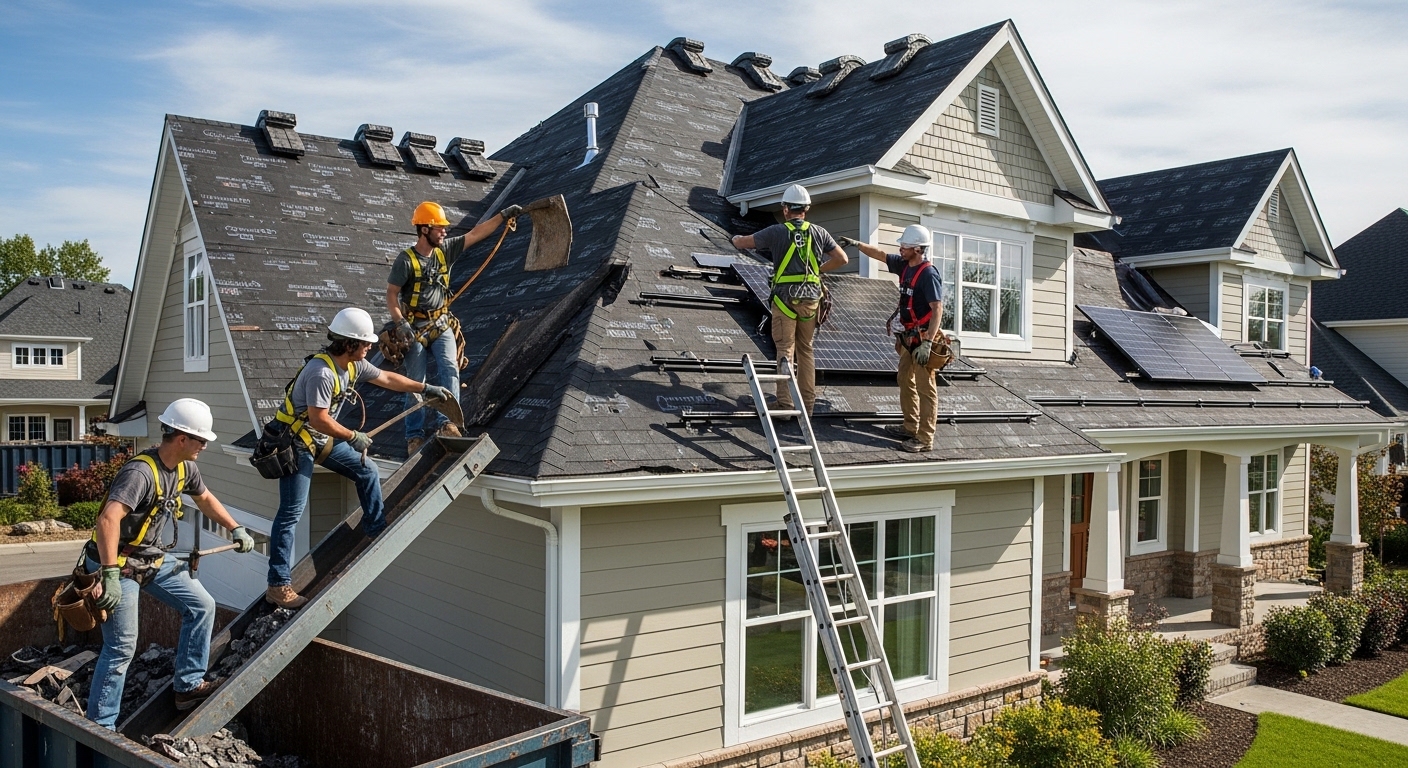
If your roof needs repairs or replacement a few years after the panels are installed, you are looking at a costly and complicated process. The panels have to be removed, the roof replacement has to happen, and then the panels have to be reinstalled. That labor adds up quickly.
This is why evaluating your roof condition solar readiness is such a critical first step. We always start with a thorough roof inspection. We look at the roof age, the condition of the shingles, the integrity of the flashing around chimneys and vents, and the structural health of the rafters underneath.
We are looking for any signs of rafter damage, rot, or weakness that could compromise the solar mounting system. A roof that is in good shape today can easily support solar panels for decades. But a roof that is nearing the end of its life is a ticking time bomb if you install panels on top of it.
Roof Age and Shingle Lifespan: Knowing When It Is Time for A New Roof
One of the biggest factors we consider is the roof age. Different roofing materials have different lifespans. Asphalt shingles, which are the most common roofing material in California, typically last 20 to 25 years. If your roof is 15 years old or more, it is worth having a serious conversation about whether a roof replacement makes sense before going solar.
You might get another 5 to 10 years out of those shingles, but do you want to gamble on whether they will last the full lifespan of your solar panels? I have seen homeowners make the choice to install solar on a 20-year-old roof, thinking they would squeeze a few more years out of it.
Then five years later, a leak develops. Now they are facing a $5,000 to $8,000 cost to remove and reinstall the panels on top of the cost of the roof replacement. That is money that could have been saved by doing the roof first.
When we look at the shingle lifespan and the roof age, we are not trying to sell you something you do not need. We are trying to help you avoid a painful and expensive situation down the road.
Rafter Damage and Solar Mounting Challenges
Sometimes the issues are not visible from the outside. During a roof inspection, we look at the structure beneath the shingles. Rafter damage can occur from years of moisture, termites, or simply the natural settling of a home. If the rafters are compromised, they may not be able to safely support the weight of a solar roof system.
Solar mounting hardware is bolted directly into the rafters, so the integrity of those rafters is absolutely essential. We also look at the condition of the flashing. Flashing is the metal material that seals the areas around chimneys, vents, and valleys on your roof. If the flashing is old or damaged, water can seep in and cause leaks.
Installing solar panels over compromised flashing is a recipe for disaster. Once the panels are up, accessing that flashing to make repairs becomes incredibly difficult. Addressing these issues before installation is not just about convenience. It is about protecting your home from water damage that could cost tens of thousands of dollars to repair.
The Best Roof Type for Solar: What Works and What Does Not
If you do decide to move forward with a roof replacement before going solar, you have an opportunity to choose the best roof type for solar. Not all roofing materials are created equal when it comes to supporting solar panels.
Asphalt shingles are the most common and they work perfectly fine with solar. They are easy to work with, and solar mounting hardware attaches securely. Composite shingles are also a good option. If you are looking for something more durable, standing seam metal roofs are actually ideal for solar. The panels can be clamped directly to the seams without any penetrations, which eliminates the risk of leaks entirely. Tile roofs, which are common in many parts of California, can also work with solar, but they require specialized mounting hardware and experienced installers who know how to work with tile without breaking it.
When we talk about the best roof type for solar, we are looking for a material that is durable, compatible with solar mounting systems, and that will last as long as your panels. If you are already planning a roof replacement, this is your chance to choose a material that sets you up for solar success for decades to come.
What to expect from our roofing service?
I know that adding a roof replacement to your solar project can feel overwhelming. You came for one thing, and now it feels like the scope is expanding. This is where our roofing service makes the process smooth and stress free.
We handle the entire process from start to finish. We coordinate the roof inspection, we help you understand the condition of your current roof, and we provide clear recommendations based on facts, not fear. If a roof replacement is recommended, we take care of everything.
We work with trusted roofing partners who share our commitment to quality. We make sure the new roof is installed correctly, with the proper underlayment, flashing, and structural integrity to support your solar roof for decades.
Then, once the new roof is in place, we come in and install your solar panels on a fresh, solid foundation. You end up with a home that has a brand new roof and a brand new solar system, both designed to last for 25 years or more.
Instead of two separate projects with two separate contractors, you have one seamless experience. That peace of mind is worth more than the cost of doing it twice.
Making The Smart Choice for Your Home and Your Wallet
So let us circle back to the question. Should you replace your roof before installing solar panels? The answer depends entirely on the roof condition solar assessment. If your roof is relatively new, with plenty of shingle lifespan remaining and no signs of rafter damage or flashing issues, then you are likely good to move forward with solar right away.
You can enjoy the savings and the energy independence without any additional work. But if your roof age is getting up there, if the shingles are curling or cracking, if there is evidence of past leaks or compromised flashing, then doing the roof replacement first is not an extra expense.
It is an investment in protecting your solar investment. It is about doing the job right the first time so you never have to worry about it again. I have worked with too many homeowners who tried to cut corners and ended up paying significantly more in the long run.
The ones who do it right, who take the time to ensure their foundation is solid before adding the panels, are the ones who enjoy decades of trouble free solar energy. They are the ones who open their utility bills with a smile, knowing their solar roof is performing exactly as designed on a roof that will last as long as the panels themselves.
A Free Inspection That Answers All Your Questions
You do not have to figure this out on your own. You do not have to guess whether your roof is ready for solar or whether a roof replacement is on the horizon. We are here to help you get the answers you need.
The best way to start is with a professional assessment. We come out, we get up on your roof, and we give you an honest evaluation. We tell you what we see. We explain your options. And we help you make a decision that makes sense for your home, your budget, and your peace of mind. No pressure. No sales pitch. Just honest guidance from a team that cares about getting it right.
Imagine the confidence of knowing your roof is solid and your solar system is installed on a foundation built to last. Imagine never having to worry about a leak developing under your panels or facing a costly removal and reinstallation down the road. That confidence is within reach.
Get a free roof and solar inspection. Reach out to us today. Let us take a look at your home, answer your questions, and help you build a solar roof system that stands the test of time. Your journey to clean, reliable, affordable energy starts with one simple inspection. Let us make it happen together.