Let me tell you about a conversation I have at least three times a week. A homeowner calls me, excited about adding home battery storage to their solar system. They have done their research. They know they want protection during outages. They know they want to maximize their savings under NEM 3.0. But then they hit a wall.
Which battery should they choose? The sleek, well known Tesla Powerwall that everyone seems to be talking about? Or the modular, highly respected Enphase IQ battery that integrates so beautifully with solar systems? I completely understand the hesitation. This is a big decision.
A battery backup system is a long term investment that will sit on your wall for the next decade or more. You want to get it right. You want something reliable, something that fits your home, and something that gives you the best value for your hard earned money.
The good news is that both of these are exceptional products from industry leaders. You really cannot go wrong with either one. But they are different. They have different strengths, different designs, and different approaches to solving the same problem.
Let me walk you through the differences so you can decide which home battery storage solution is the perfect fit for your family.
The Heart Of Your Energy Independence: Understanding What Home Battery Storage Really Does
Before we dive into the comparison, let us take a moment to appreciate what home battery storage actually brings to your life. If you have solar panels on your roof, you are already generating clean, renewable energy. But without a solar battery, that energy is either used immediately or sent back to the grid.
When the sun goes down, you are buying power from the utility again. And when the grid fails, your solar system shuts off completely. A battery backup system changes everything. It captures the excess energy your panels produce during the day and stores it for when you need it most.
During the evening peak hours, when utility rates are highest, you draw from your battery instead of the grid. During a power outage, your home battery storage keeps your lights on, your refrigerator running, and your family comfortable. It transforms your solar system from a daytime only solution into a 24/7 power plant that works for you around the clock.
Under NEM 3.0, this shift toward self-consumption is absolutely critical for protecting your solar savings. Without a solar battery, your export rate is so low that your financial returns take a significant hit. With a battery backup system, you capture the full value of every kilowatt your panels produce.
The Sleek All in One Solution for Home Battery Storage
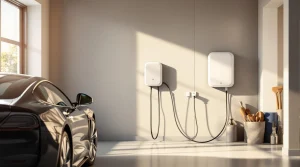
The Tesla Powerwall has become almost synonymous with home battery storage. It is the battery that put residential energy storage on the map. And for good reason. It is a beautifully designed, all in one unit that delivers impressive performance in a compact package.
Let us talk specs. The Tesla Powerwall offers 13.5 capacity kWh of usable storage. That is enough to power the essential circuits in most homes for 12 to 24 hours, depending on your usage. It has a built in inverter, which simplifies installation and reduces the amount of equipment on your wall.
The backup duration is excellent, and if you need more storage, you can stack multiple Powerwalls together. Want 27 capacity kWh? Add a second unit. Want 40.5? Add a third. The system scales beautifully. One of the things homeowners love most about the Tesla Powerwall is the monitoring app. The Tesla app is incredibly intuitive.
You can see exactly how much energy your solar panels are producing, how much is stored in your battery, and how much your home is consuming. You can set preferences for how you want the battery to behave during peak hours, and you can monitor your backup duration during an outage right from your phone. It is clean, it is simple, and it just works.
The Modular Approach to Energy Storage
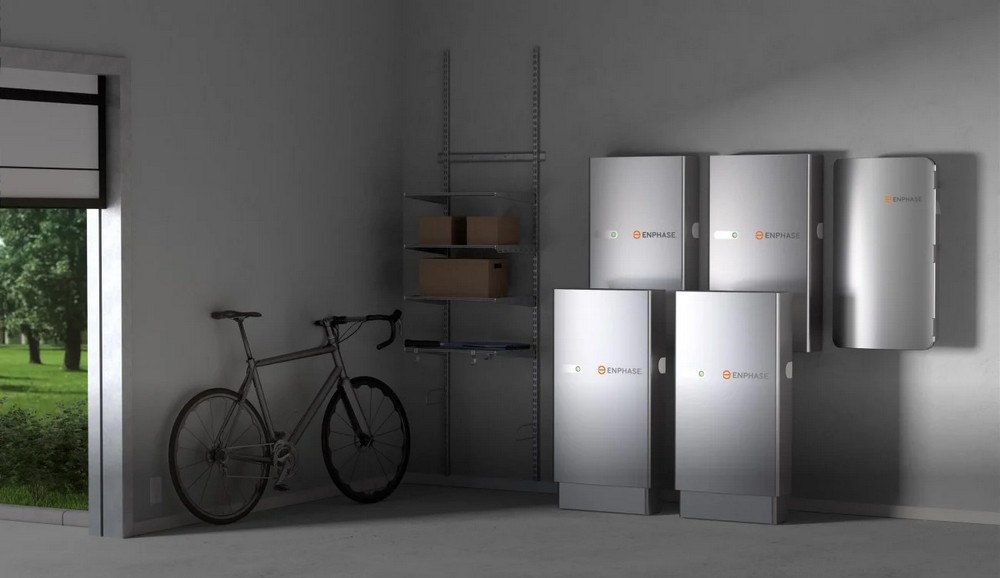
Now let us talk about the Enphase IQ battery. If the Tesla Powerwall is the sleek all in one, the Enphase IQ battery is the flexible modular system that gives you more control over how you build your home battery storage. Enphase is the company behind the micro inverters that are on millions of solar systems across the country.
Their solar battery leverages that same technology to create a seamless ecosystem. The Enphase IQ battery comes in different sizes, with the IQ10T being one of the most popular models. The IQ10T offers 10.08 capacity kWh of usable storage. But here is where the modular approach shines. You can start with one battery and add more later as your needs grow.
Maybe right now you just want enough backup duration to cover your essentials during an outage. You install one IQ10T. A few years later, you buy an electric vehicle and want more storage to charge it overnight. You add a second battery. You are not locked into a single decision at the moment of installation.
The Enphase IQ battery is also designed to work seamlessly with Enphase micro inverters. If you already have an Enphase solar system, adding an Enphase IQ battery creates a unified energy ecosystem that is incredibly easy to manage. The monitoring app from Enphase gives you detailed insights into your energy production, consumption, and storage at the panel level.
Comparing Capacity kWh, Backup Duration, And Installation
Let us put these two home battery storage options side by side and look at the practical differences that matter to you. When we talk about capacity kWh, the Tesla Powerwall offers 13.5 per unit, while the Enphase IQ10T offers 10.08 per unit.
On paper, the Tesla Powerwall gives you more storage in a single unit. But the modular nature of the Enphase IQ means you can add units in smaller increments. If you want 20 capacity kWh, you would need two Powerwalls or two IQ10T units. The total cost ends up being fairly comparable.
Backup duration is directly tied to capacity kWh. A single Tesla Powerwall will generally give you a longer backup duration than a single IQ10T because it has more storage. But if you are already planning to install multiple batteries, the difference becomes less significant.
The more important factor is how the battery integrates with your home and your existing equipment. Installation is another area where these two differ. The Tesla Powerwall has a built in inverter, which can simplify the installation if you are adding it to a system that uses string inverters.
What real homeowners ask: answering your battery FAQs?
I spend a lot of time answering battery FAQs from homeowners who are trying to make this exact decision. Let me address a few of the most common ones here.
People often ask me about the monitoring app experience. Both the Tesla app and the Enphase app are excellent. The Tesla app is arguably more polished and user friendly for the average homeowner. The Enphase app offers more granular detail, which appeals to homeowners who love data and want to see exactly what is happening at the panel level.
Another common question is about charge cycles and longevity. Both batteries are rated for 10 years and thousands of charge cycles. Under normal usage, you can expect both to perform reliably for the life of the warranty and beyond. Tesla and Enphase are both industry leaders who stand behind their products.
Homeowners also ask about scalability. The Tesla Powerwall scales in increments of 13.5 capacity kWh. The Enphase IQ scales in increments of 10.08 capacity kWh. If you want a specific amount of storage that falls between those numbers, the modularity of the Enphase IQ gives you more precise control.
But if you want a simple, single unit solution, the Tesla Powerwall offers more storage in one box.
Your Path to Energy Independence Starts Here
Adding home battery storage to your solar system is one of the smartest moves you can make as a homeowner. It protects you during outages. It maximizes your savings under NEM 3.0. It gives you control over your energy future. Whether you choose the Tesla Powerwall or the Enphase IQ battery, you are investing in reliability, performance, and peace of mind.
If you are still asking yourself do you need a battery, the answer for most homeowners today is yes. The combination of frequent outages, rising utility rates, and the changes under NEM 3.0 make home battery storage not just a luxury, but a practical necessity for maximizing the value of your solar investment.
We have helped hundreds of families navigate this decision, and we would love to help you too. Let us recommend the right battery for your home. Reach out to us today. We will sit down, look at your energy usage, your outage concerns, and your goals, and we will help you choose the battery backup system that fits your life perfectly. Your energy independent future is waiting.