Have you ever looked at your neighbor’s solar panels and thought, “I would love to do that, but I just don’t have ten or twenty thousand dollars sitting in the bank”? If you are nodding your head right now, you are not alone. I have had this exact conversation with hundreds of homeowners.
They want the lower bills. They want the energy independence. They want to stop feeling frustrated every time they open that utility envelope. But that upfront price tag? It stops them in their tracks. Here is the truth that most people do not realize until they actually start looking into it.
You do not need a pile of cash to go solar. In fact, the majority of homeowners who switch to clean energy never write a big check upfront. They use smart solar financing options that allow them to start saving money from day one. Yes, you read that right. Day one.
Imagine waking up tomorrow, installing a system on your roof, and paying less each month than you currently pay the utility company. That is not a dream. That is the reality that thousands of families are living right now. Let me show you how it works.
Why Sticker Shock Shouldn’t Stop You from Exploring Solar Financing
When people first start exploring solar, they often ask for a solar quote, see the total system price, and immediately feel their stomach drop. It is a big number. There is no denying that. But here is what I want you to understand. Looking at the total cost of a solar system without looking at the financing options is like looking at the price of a house without understanding what a mortgage is. It gives you a completely incomplete picture.
The true cost of going solar is not the number on the contract. The true cost of going solar is what you pay each month versus what you would have paid the utility. And when you structure it right, that number is almost always lower than your current electric bill. We are not asking you to pay thousands upfront.
We are offering you a way to swap one monthly expense for another, a smaller one, that eventually goes away entirely once the system is paid off. I have sat at kitchen tables across California and shown families the math. We pull up their utility bills from the last year. We see what they are paying PG&E or SCE. Then we design a system tailored to their home and present a solar financing plan.
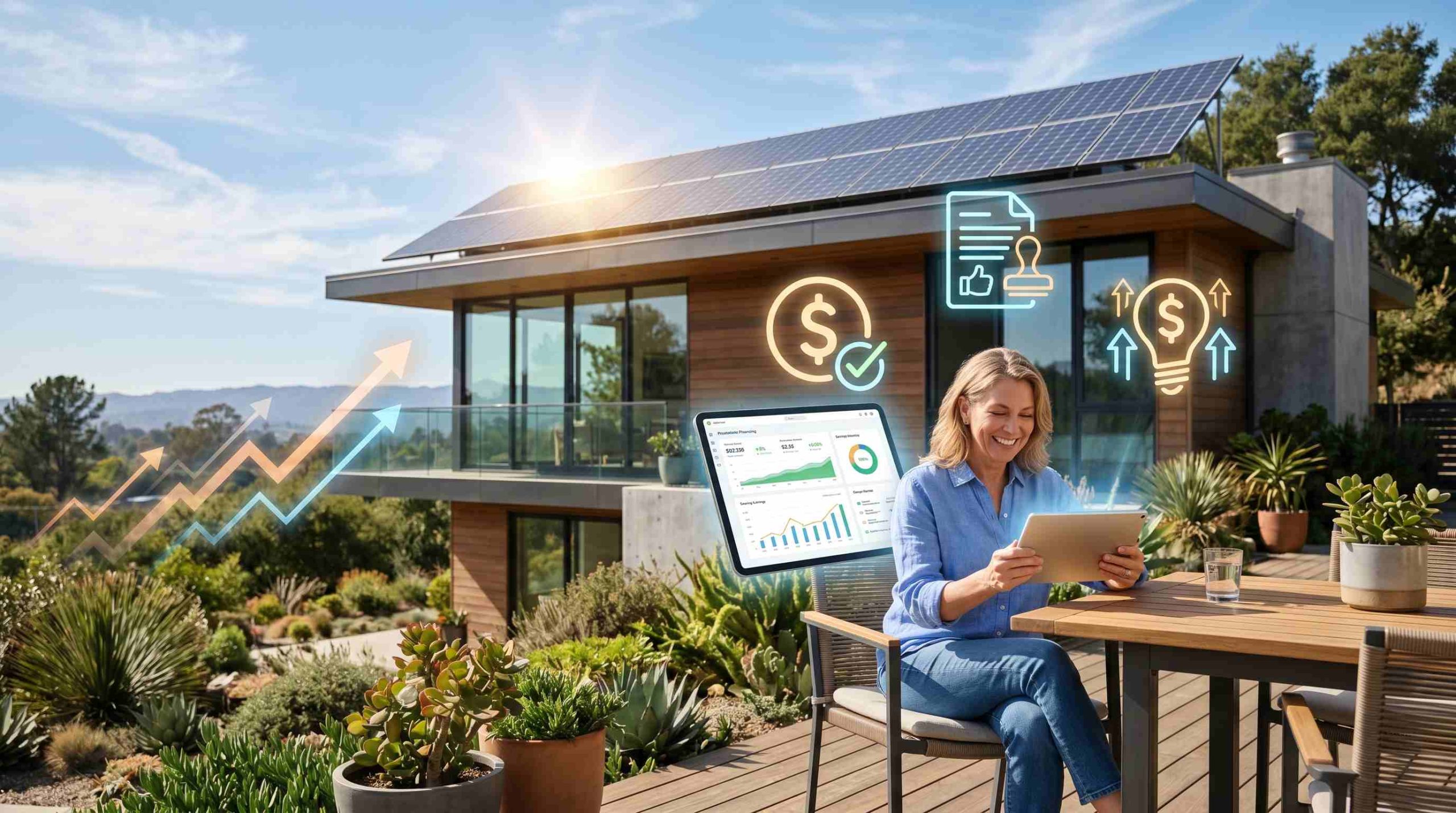
Nine times out of ten, their new monthly payment for the solar loan is less than their average electric bill. So from the very first month after installation, they have more money in their pocket. That is the true cost of going solar when you look at it through the right lens. It is not an expense; it is a financial upgrade.
How Zero Down Solar Financing Lets You Start Saving Without Spending a Dime
Let me introduce you to the concept that changes everything for most homeowners. Zero down solar. It sounds too good to be true, does not it? How can you get a $20,000, $30,000, or even $40,000 system installed on your roof without paying anything out of pocket?
The answer lies in the different solar financing products that have been designed specifically to make clean energy accessible to everyone. The most common way homeowners go zero down solar is through a solar loan. Think of it like a home improvement loan, but one that is structured to align with your energy savings. You do not pay anything at signing.
The solar installers show up, put the system on your roof, and you start making monthly payment s that are designed to be lower than your previous utility bill. Some of these loans even offer deferred payments for the first 12 to 18 months, giving you even more breathing room.
But the solar loan is not the only path to zero down solar. There are also programs like PACE financing and the HERO program, which are specifically designed for California homeowners. These programs tie the financing to your property taxes. You pay back the cost of the system over a long period, often 20 to 30 years, through a small line item on your annual property tax bill.
Solar Loan Versus Solar Lease Versus PPA: Finding the Right Fit for Your Family
When we start talking about solar financing, I usually see three options come up the most. A solar loan, a solar lease, and a PPA, which stands for Power Purchase Agreement. Each one has its strengths, and the right choice really depends on your goals and your financial situation. Let me break them down in plain English.
A solar loan is the most popular option for homeowners who want to own their system. You are essentially borrowing money to buy the solar panels, just like you would borrow to buy a car or remodel a kitchen. You own the equipment from day one. That means you get to claim the federal tax credit. It means you are building equity in your home.
And once the loan is paid off, your energy is completely free. The monthly payment is fixed, so you know exactly what you are paying for the life of the loan. A solar lease is a different structure. With a lease, you do not own the equipment. The solar company owns it, and you pay a fixed monthly payment to use the power it produces.
There is no upfront cost, and the payments are typically lower than a loan because you are not paying off the full system cost. However, you do not get the tax credit, and you do not own the system at the end. It is a great option for people who want simple, predictable savings without worrying about ownership details.
Why Waiting Costs, You More Than Going Solar Today
I want to leave you with one final thought before we wrap this up. I have seen a pattern over the years. Homeowners hear about zero down solar, they get excited, and then they think, “I will do it next year. I will wait until I have a little more saved up.” Here is the thing. Waiting is expensive. It is expensive in three ways.
First, utility rates keep climbing. PG&E rate increases are not stopping. Every year you wait, you are paying higher bills to the utility, money that could have been going toward owning your own power. Second, the federal tax credit is stepping down. If you wait, you get a smaller credit. If you act now, you lock in the full benefit. Third, net metering policies have already changed.
Under NEM 3.0, the best way to maximize savings is with a battery, and the longer you wait, the longer you are missing out on those savings. The families who are switching to solar today are not waiting for a perfect moment. They are realizing that the perfect moment is now.
They are using solar financing to make it happen with zero down solar. They are locking in monthly payments that are lower than their utility bills. And they are enjoying the peace of mind that comes with knowing they are protected from future rate hikes.
Making The Smart Choice for Your Home and Wallet
You do not need to have thousands of dollars saved up. You do not need perfect credit. You do not need to understand the difference between a solar loan and a PPA before you call us. All you need is the curiosity to see what is possible for your home. We handle the rest.
We have helped families from all walks of life go solar with zero down solar options. We have worked with first time homebuyers, retirees on fixed incomes, and busy parents who just want one less thing to worry about. Every single one of them started with a simple conversation. They asked a few questions. They looked at the numbers. And they realized that the barrier they thought was standing in their way simply did not exist.
Check Your Financing Options — Free. Reach out to us today. Let us look at your specific situation, run the numbers, and show you exactly how zero down solar can work for you. There is no obligation, no pressure, just honest answers and a clear path forward. Your solar journey starts with one click. Let us make it happen together.